
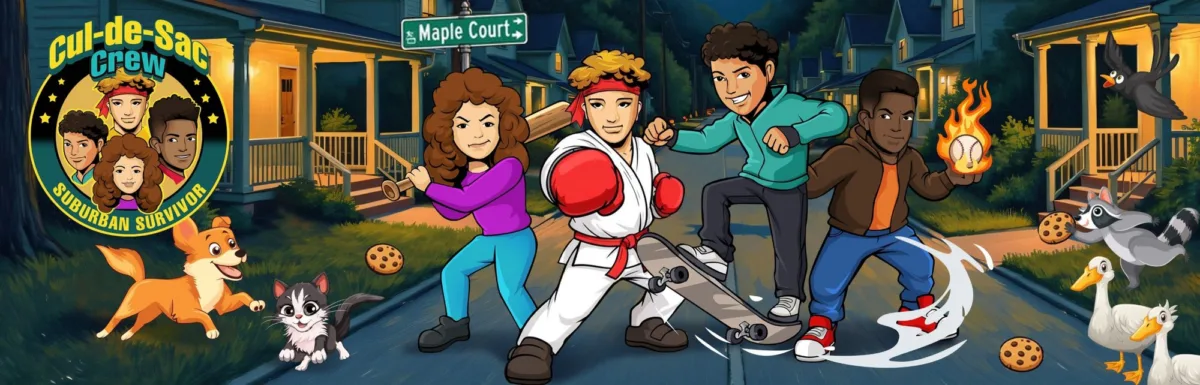
Why I Made Cul-de-Sac Crew

I’ve been talking about Cul-de-Sac Crew for decades. Here’s why I finally built it, who it honors, and what comes next.

I always wanted to make a video game. It started in the 1990s, when I was a teenager playing Zombies Ate My Neighbors. I never let go of that feeling. Anyone who has known me long enough will tell you I’ve been talking about Cul-de-Sac Crew™ for decades.

Then I played Vampire Survivors, and it clicked. That was the kind of game I could actually build.

I Wasn’t Starting From Zero

I’ve worked in IT since 2001 and have run my own web design and development business on the side since 2004. Back in the early 2000s I launched a resume building app, getnoticedfirst.com, which I plan to bring back soon. I’ve been an adjunct professor since 2015.

Over the years I’ve done media design, creative direction, project management, development, IT support and maintenance, planning, procurement, supervision, and training. Every one of those skills went into this game.

When AI got good enough to help build video games, I jumped right in. In July 2026 I started creating art and learning Godot. Now it’s October 2026, and it’s push to launch time.

What the Game Is

Cul-de-Sac Crew: Suburban Survivor is a top-down survivors game with a Saturday morning cartoon feel. You play as one of the kids on Maple Court, and the block is under siege. The animals want your Treats. The people want your Blessings. Your job is to take back the block.

Nobody gets hurt in this game. Everybody gets chased off, and every one you chase off earns you Respect. You fight through five stages: Maple Court, a haunted mansion, a corn maze, a parking lot, and the mall, where Big Bad Maple Man is waiting for you.
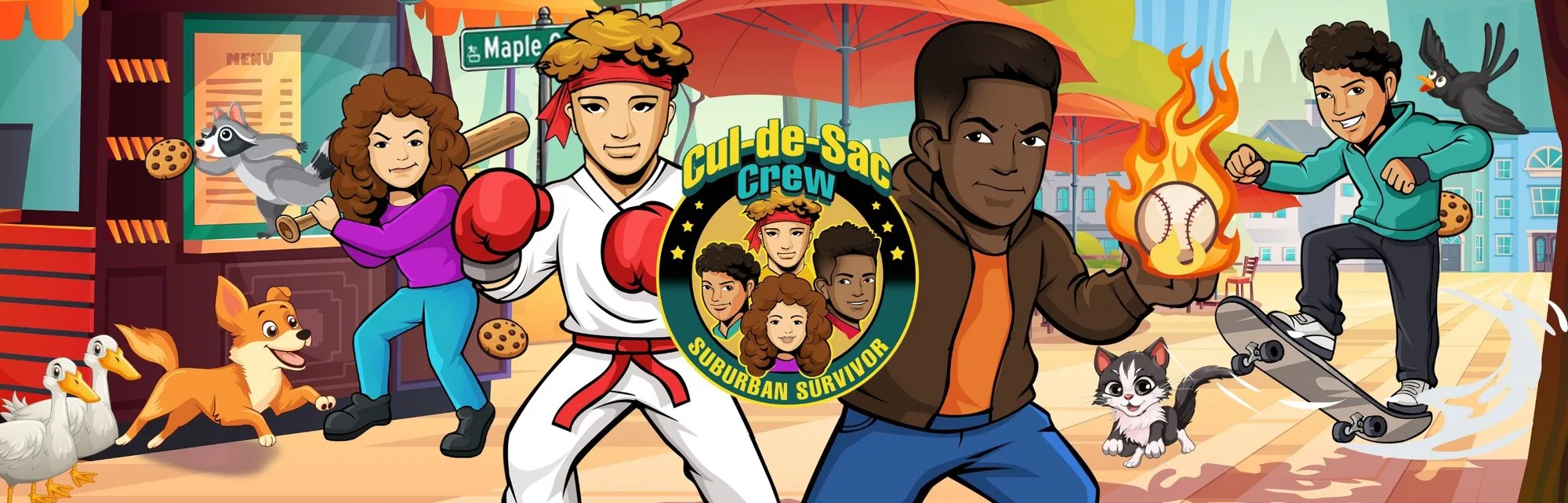
The four starting crew members outside a cafe, with pets and cookies

This Game Is Personal

The good neighbors who help the Crew honor real people in my life.

Grandma Lilly honors Ms. Leslie Coach, my teacher when I was a kid in North Philadelphia. Annie honors my late mother, Angela. Dad-Dad honors my late father-in-law, James. Sally honors my late sister, Saleah, and Farmer Tee honors my sister Tiara.

My daughter Gabriella helped design it.  The Crew itself comes from Gabby’s childhood drawings.

Where You Can Play

The game started on the web, mobile is next, and Steam follows in early 2027.

Everything lives at CuldesacCrew.com.

This Is Only the Start

I put my passion, my soul, my creativity, and my direction into Cul-de-Sac Crew: Suburban Survivor. And this is only the start.

Cul-de-Sac Crew is a series. My daughter and I are already working on our second game, Cul-de-Sac Crew: Living Large. More games under the Cul-de-Sac Crew name are on the way.

That’s my why.

Demetrius Pinder
Nuts and Bolts Web Design


Cascading Style Sheets Offer Greater Control

Since 1994, Cascading Style Sheets (CSS) have slowly been becoming the predominant method for styling all types of website pages. It is now acclaimed as the best method for controlling typography and layout throughout a website. Although CSS seems to be the most efficient, user-friendly, web page editing option available today, many people still resist its use failing to understand the benefits from using CSS language.

There are a number of good reasons you as a designer should use CSS including:

  1. CSS was built by the World Wide Web Consortium (W3C) to replace the cumbersome use of inline HTML tables, frames, tags and other mechanisms that led to some confusion and a lot of excess coding.
  2. CSS produces faster download times because page files are 50 percent less the size than a traditionally built HTML page.
  3. Shorter editing time is involved when one CSS file can control the look of hundreds of web pages.
  4. Here’s one of the absolutely best reasons to use CSS – controlling typography. No need ever again to use a font tag which actually was very cumbersome. With CSS, designers have complete control of faces, sizes, weight, leading, line height, colors and much more making for exciting and endlessly variable use of type.
  5. CSS is easy to use – just as easy as HTML coding. It allows for an intuitive approach to creating edited elements plus.
  6. CSS improves a website’s accessibility. There is no need to create separate HTML coded tags for different effects. Therefore, all <p> tags simply indicate a paragraph and all the headline tags will denote the specific headline called for in each instance. This helps to cut down on the need for separate browser coding.
  7. CSS works in cross-platforms as well as used not only for web browsers but in other media like a Power Point presentation.
  8. Placement – actual alignment on a page – is in better control using CSS.
  9. Web page design can be kept spate from content using CSS. Image elements that repeat can be held in a file called for in various positions throughout the site through CSS use. This system allows for different contributors to follow a set methodology that is user-friendly.
  10. CSS helps sites attain better search engine rankings. Once you use HTML for structuring just content in a web page instead of putting in a bunch of tags everywhere, the search engine spiders will crawl your pages effectively and more than likely grant a higher ranking.

    Control, control and more control remains the key benefit from CSS use. It provides a greater degree of options controlling the look and the feel of each web page. Plus, organization is at a maximum when using one file to control many. CSS allows for greater speed and adaptability when updating websites especially when changing complete sections like a header or footer. In the past, coding these requires installation on each and every page. CSS allows a designer the ability to replace or move elements by the simple change on one page.